
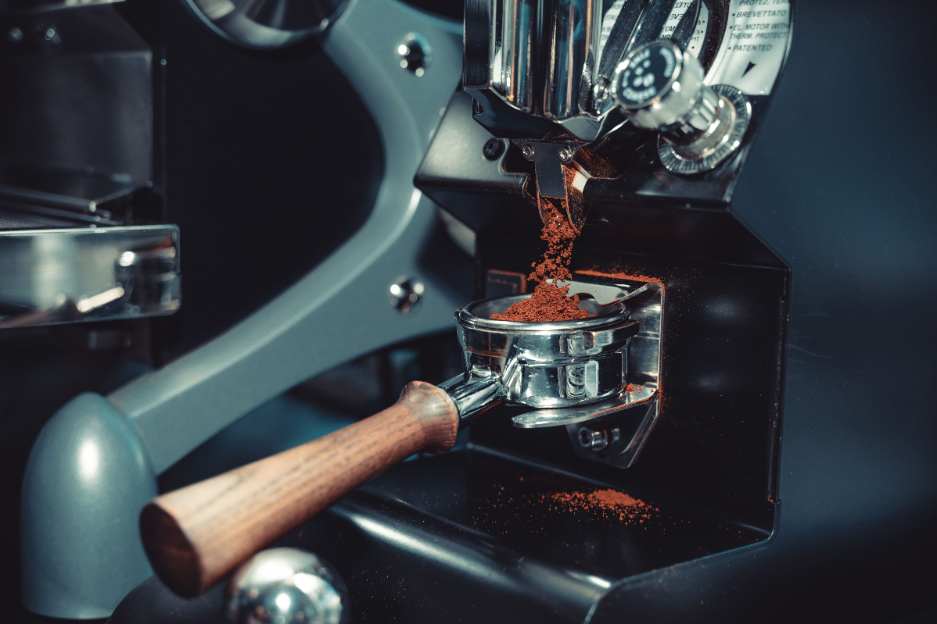
High output, budget-friendly, easy to use — the Pinecone GH-B bulk grinder checks every box on a busy commercial kitchen's wish list. Grinding through more than 500 g / 1.1 lbs of coffee every minute while holding a tight, consistent particle size range, this workhorse keeps pace whether it's dialing in espresso or prepping bulk brew. No steep learning curve, no premium price tag — just dependable grinding built for real-world volume. Ready to keep your bar running at full speed? Add the Pinecone GH-B to your equipment lineup today.
Free Ground Shipping on Qualified Orders
Warranty On All Equipment
Express Shipping Available
Lifetime Support
Free Ground Shipping on Qualified Orders
Warranty On All Equipment
Express Shipping Available
Lifetime Support
Free Ground Shipping on Qualified Orders
Warranty On All Equipment
Express Shipping Available
Lifetime Support
Free Ground Shipping on Qualified Orders
Warranty On All Equipment
Express Shipping Available
Lifetime Support
Free Ground Shipping on Qualified Orders
Warranty On All Equipment
Express Shipping Available
Lifetime Support
Free Ground Shipping on Qualified Orders
Warranty On All Equipment
Express Shipping Available
Lifetime Support
All
All categories
- All categories
Your cart
Skeleton text
Skeleton text
Skeleton text
Skeleton text
Skeleton text
Skeleton text
Skeleton text
Skeleton text
Skeleton text
Skeleton text
Compare
Product Comparison
How they are Different
|
__ __ |
|
|---|---|
| Description |
Description - __ |
| Rating |
Rating - __ |
| Vendor |
Vendor - __ |
| Color |
Color - __ |
|
|
Compare products ( / )
57 products
57 products
Sort by:
- Featured
- Most relevant
- Best selling
- Alphabetically, A-Z
- Alphabetically, Z-A
- Price, low to high
- Price, high to low
- Date, old to new
- Date, new to old

Added to compare
Reached count_product-product limit
{"id":46141549117487,"title":"Volumetric","option1":"Volumetric","option2":null,"option3":null,"sku":"MAPPI19VOL01ND0001","requires_shipping":true,"taxable":true,"featured_image":null,"available":true,"name":"Nuova Simonelli Appia Life One Group Volumetric Espresso Machine - 110V - Volumetric","public_title":"Volumetric","options":["Volumetric"],"price":605000,"weight":0,"compare_at_price":null,"inventory_management":"shopify","barcode":null,"requires_selling_plan":false,"selling_plan_allocations":[],"quantity_rule":{"min":1,"max":null,"increment":1}}
Nuova Simonelli
From $6,050.00
Unit price
Nuova Simonelli Appia Life Volumetric Espresso Machine (MAPPI19VOL01ND0001)
Give your baristas the tool they need to impress every customer, every time. The Nuova Simonelli Appia Life is built to deliver top-notch espresso with the consistency your business depends on. Its durable steel construction and intuitive controls make it easy for any barista to master, so a perfect cup is never a matter of luck.
Flexibility meets precision with dual volumetric and manual dosing, giving your team the freedom to dial in specialty drinks exactly how they want. The built-in soft infusion system takes the guesswork out of tamping, minimizing human error and ensuring every shot pulls smooth and balanced. That kind of consistency is what turns a first-time customer into a regular.
Safety and ease of use are built right in: a cool-touch wand protects your staff during busy rushes, and the push-pull steam system makes milk texturing fast and foolproof. The result? Better espresso, happier customers, and a smoother workflow behind the counter.
Available for pickup at
Out of stock at
Added to compare
Reached count_product-product limit

Added to compare
Reached count_product-product limit
{"id":46954003431471,"title":"Black \/ Direct","option1":"Black","option2":"Direct","option3":null,"sku":"MOSCA22TEM010030","requires_shipping":true,"taxable":true,"featured_image":{"id":40244238221359,"product_id":8465742889007,"position":1,"created_at":"2026-09-07T06:44:51-04:00","updated_at":"2026-09-07T06:44:53-04:00","alt":null,"width":1200,"height":1200,"src":"\/\/regalprosupply.com\/cdn\/shop\/files\/OscarIIfrontviewinblack.avif?v=1788777893","variant_ids":[46954003431471,46954007396399]},"available":true,"name":"Oscar II - Black \/ Direct","public_title":"Black \/ Direct","options":["Black","Direct"],"price":245000,"weight":0,"compare_at_price":null,"inventory_management":"shopify","barcode":null,"featured_media":{"alt":null,"id":31176082751535,"position":1,"preview_image":{"aspect_ratio":1.0,"height":1200,"width":1200,"src":"\/\/regalprosupply.com\/cdn\/shop\/files\/OscarIIfrontviewinblack.avif?v=1788777893"}},"requires_selling_plan":false,"selling_plan_allocations":[],"quantity_rule":{"min":1,"max":null,"increment":1}}
Nuova Simonelli
$2,450.00
Unit price
Simple. Efficient. Compact.
Ideal for homes, offices, mobile setups, and small shops.
Like its predecessor, the Oscar II is built around bringing professional-quality espresso into the home. Beyond its new stainless steel and ABS body, it introduces several useful upgrades that push the limits of what an affordable home espresso machine can do — including an ergonomic steam lever, timed dosing, and an improved steam wand. Inside, the Oscar II retains a professional-sized group head and copper boiler, making it the perfect machine for any coffee enthusiast.
Available for pickup at
Out of stock at
Added to compare
Reached count_product-product limit

Added to compare
Reached count_product-product limit
{"id":46134510518319,"title":"Pour Over","option1":"Pour Over","option2":null,"option3":null,"sku":"MOSCA21TEM010083","requires_shipping":true,"taxable":true,"featured_image":null,"available":true,"name":"Oscar Mood - Pour Over","public_title":"Pour Over","options":["Pour Over"],"price":315000,"weight":0,"compare_at_price":null,"inventory_management":"shopify","barcode":null,"requires_selling_plan":false,"selling_plan_allocations":[],"quantity_rule":{"min":1,"max":null,"increment":1}}
Nuova Simonelli
$3,150.00
Unit price
Espresso quality that scales from your kitchen counter to your café counter.
The Oscar Mood brings commercial-grade brewing technology into a compact, single-group machine — built for home baristas and light-volume locations alike. PID temperature control, an easy push-button steam wand, and a digital shot timer make consistent, café-quality espresso accessible at any skill level.
Configurations: Direct Connect or Pour-over | Groups: 1 | Colors: Black | Best for: Home to light-volume commercial use
Available for pickup at
Out of stock at
Added to compare
Reached count_product-product limit

Added to compare
Reached count_product-product limit
{"id":46973166092335,"title":"Default Title","option1":"Default Title","option2":null,"option3":null,"sku":"11246","requires_shipping":true,"taxable":true,"featured_image":null,"available":true,"name":"Perfect Moose - Smart Pitcher Milk based 12oz(35cl)(white)","public_title":null,"options":["Default Title"],"price":11199,"weight":0,"compare_at_price":null,"inventory_management":"shopify","barcode":null,"requires_selling_plan":false,"selling_plan_allocations":[],"quantity_rule":{"min":1,"max":null,"increment":1}}
Perfect Moose
$111.99
Unit price
Smart Moose Pitcher, Milk Based, 12oz (35cl), White
For the Perfect Moose Greg and Perfect Moose Jack
What if every pitcher of milk came out exactly the same?
Different baristas, different shifts, different results. That inconsistency costs you remakes, wasted milk, and customers who notice. The Smart Moose pitcher fixes it at the source: set it once, and it steams the same way every time.
Every Smart Moose pitcher has an RFID tag in its base that stores your texture and temperature settings. Activate a new pitcher once on the touch display, choose how thick and how hot you want your microfoam, and save. From then on, just fill the pitcher with cold milk, place it on the holder, and let go. The reader recognizes the pitcher, the built-in scale measures the milk, and the Perfect Moose Greg or Perfect Moose Jack steams it automatically. Your best barista and your newest hire get the same microfoam.
This white 12oz (35cl) pitcher is made for dairy milks: whole, low-fat, barista milk, and more. It’s the most compact size in the range, perfect for single drinks and small servings, so you steam what you need without wasting a drop. The color coding keeps your bar organized. Pair it with the green pitcher for plant-based milks and the black pitcher for mix-based drinks like hot chocolate, so every drink has its own dedicated pitcher. Need to fine-tune a recipe later? Place the empty pitcher on the holder and adjust.
Built from color-coated stainless steel, it’s made for daily use behind the bar. Rinse it right after each cycle and wash by hand to keep the coating looking sharp. Please note that the Perfect Moose only works with Smart Moose pitchers, so this one is required, and regular pitchers won’t be recognized.
Add the Smart Moose Pitcher to your cart today and put consistent microfoam in every drink you serve.
Available for pickup at
Out of stock at
Added to compare
Reached count_product-product limit

Added to compare
Reached count_product-product limit
{"id":46954216849455,"title":"Default Title","option1":"Default Title","option2":null,"option3":null,"sku":"9751","requires_shipping":true,"taxable":true,"featured_image":null,"available":true,"name":"Perfect Moose - Smart Pitcher Milk based 16oz (50cl)(white)","public_title":null,"options":["Default Title"],"price":12099,"weight":0,"compare_at_price":null,"inventory_management":"shopify","barcode":null,"requires_selling_plan":false,"selling_plan_allocations":[],"quantity_rule":{"min":1,"max":null,"increment":1}}
Perfect Moose
$120.99
Unit price
Smart Moose Pitcher, Milk Based, 16oz (50cl), White
For the Perfect Moose Greg and Perfect Moose Jack
What if every pitcher of milk came out exactly the same?
Different baristas, different shifts, different results. That inconsistency costs you remakes, wasted milk, and customers who notice. The Smart Moose pitcher fixes it at the source: set it once, and it steams the same way every time.
Every Smart Moose pitcher has an RFID tag in its base that stores your texture and temperature settings. Activate a new pitcher once on the touch display, choose how thick and how hot you want your microfoam, and save. From then on, just fill the pitcher with cold milk, place it on the holder, and let go. The reader recognizes the pitcher, the built-in scale measures the milk, and the Perfect Moose Greg or Perfect Moose Jack steams it automatically. Your best barista and your newest hire get the same microfoam.
This white 16oz (50cl) pitcher is made for dairy milks: whole, low-fat, barista milk, and more. The smaller size suits single drinks and smaller servings, so you steam what you need without wasting a drop. The color coding keeps your bar organized. Pair it with the green pitcher for plant-based milks and the black pitcher for mix-based drinks like hot chocolate, so every drink has its own dedicated pitcher. Need to fine-tune a recipe later? Place the empty pitcher on the holder and adjust.
Built from color-coated stainless steel, it’s made for daily use behind the bar. Rinse it right after each cycle and wash by hand to keep the coating looking sharp. Please note that the Perfect Moose only works with Smart Moose pitchers, so this one is required, and regular pitchers won’t be recognized.
Add the Smart Moose Pitcher to your cart today and put consistent microfoam in every drink you serve.
Available for pickup at
Out of stock at
Added to compare
Reached count_product-product limit

Added to compare
Reached count_product-product limit
{"id":46973164912687,"title":"Default Title","option1":"Default Title","option2":null,"option3":null,"sku":"9750","requires_shipping":true,"taxable":true,"featured_image":null,"available":true,"name":"Perfect Moose - Smart Pitcher Milk based 24oz (75cl) (white)","public_title":null,"options":["Default Title"],"price":12899,"weight":0,"compare_at_price":null,"inventory_management":"shopify","barcode":null,"requires_selling_plan":false,"selling_plan_allocations":[],"quantity_rule":{"min":1,"max":null,"increment":1}}
Perfect Moose
$128.99
Unit price
Smart Moose Pitcher, Milk Based, 24oz (75cl), White
For the Perfect Moose Greg and Perfect Moose Jack
What if every pitcher of milk came out exactly the same?
Different baristas, different shifts, different results. That inconsistency costs you remakes, wasted milk, and customers who notice. The Smart Moose pitcher fixes it at the source: set it once, and it steams the same way every time.
Every Smart Moose pitcher has an RFID tag in its base that stores your texture and temperature settings. Activate a new pitcher once on the touch display, choose how thick and how hot you want your microfoam, and save. From then on, just fill the pitcher with cold milk, place it on the holder, and let go. The reader recognizes the pitcher, the built-in scale measures the milk, and the Perfect Moose Greg or Perfect Moose Jack steams it automatically. Your best barista and your newest hire get the same microfoam.
This white 24oz (75cl) pitcher is made for dairy milks: whole, low-fat, barista milk, and more. The color coding keeps your bar organized. Pair it with the green pitcher for plant-based milks and the black pitcher for mix-based drinks like hot chocolate, so every drink has its own dedicated pitcher. Need to fine-tune a recipe later? Place the empty pitcher on the holder and adjust.
Built from color-coated stainless steel, it’s made for daily use behind the bar. Rinse it right after each cycle and wash by hand to keep the coating looking sharp. Please note that the Perfect Moose only works with Smart Moose pitchers, so this one is required, and regular pitchers won’t be recognized.
Add the Smart Moose Pitcher to your cart today and put consistent microfoam in every drink you serve.
Available for pickup at
Out of stock at
Added to compare
Reached count_product-product limit

Added to compare
Reached count_product-product limit
{"id":46973168386095,"title":"Default Title","option1":"Default Title","option2":null,"option3":null,"sku":"10823","requires_shipping":true,"taxable":true,"featured_image":null,"available":true,"name":"Perfect Moose - Smart Pitcher Milk based 33oz (100cl) (white)","public_title":null,"options":["Default Title"],"price":13699,"weight":0,"compare_at_price":null,"inventory_management":"shopify","barcode":null,"requires_selling_plan":false,"selling_plan_allocations":[],"quantity_rule":{"min":1,"max":null,"increment":1}}
Perfect Moose
$136.99
Unit price
Smart Moose Pitcher, Milk Based, 33oz (100cl), White
For the Perfect Moose Greg and Perfect Moose Jack
What if every pitcher of milk came out exactly the same?
Different baristas, different shifts, different results. That inconsistency costs you remakes, wasted milk, and customers who notice. The Smart Moose pitcher fixes it at the source: set it once, and it steams the same way every time.
Every Smart Moose pitcher has an RFID tag in its base that stores your texture and temperature settings. Activate a new pitcher once on the touch display, choose how thick and how hot you want your microfoam, and save. From then on, just fill the pitcher with cold milk, place it on the holder, and let go. The reader recognizes the pitcher, the built-in scale measures the milk, and the Perfect Moose Greg or Perfect Moose Jack steams it automatically. Your best barista and your newest hire get the same microfoam.
This white 33oz (100cl) pitcher is made for dairy milks: whole, low-fat, barista milk, and more. It’s the largest size in the range, built for busy bars that steam for several drinks per batch, so you spend less time refilling and more time serving. The color coding keeps your bar organized. Pair it with the green pitcher for plant-based milks and the black pitcher for mix-based drinks like hot chocolate, so every drink has its own dedicated pitcher. Need to fine-tune a recipe later? Place the empty pitcher on the holder and adjust.
Built from color-coated stainless steel, it’s made for daily use behind the bar. Rinse it right after each cycle and wash by hand to keep the coating looking sharp. Please note that the Perfect Moose only works with Smart Moose pitchers, so this one is required, and regular pitchers won’t be recognized.
Add the Smart Moose Pitcher to your cart today and put consistent microfoam in every drink you serve.
Available for pickup at
Out of stock at
Added to compare
Reached count_product-product limit

Added to compare
Reached count_product-product limit
{"id":46973171040303,"title":"Default Title","option1":"Default Title","option2":null,"option3":null,"sku":"11250","requires_shipping":true,"taxable":true,"featured_image":null,"available":true,"name":"Perfect Moose - Smart Pitcher Mix based 12oz (35cl) (black)","public_title":null,"options":["Default Title"],"price":11199,"weight":0,"compare_at_price":null,"inventory_management":"shopify","barcode":null,"requires_selling_plan":false,"selling_plan_allocations":[],"quantity_rule":{"min":1,"max":null,"increment":1}}
Perfect Moose
$111.99
Unit price
Smart Moose Pitcher, Mix Based, 12oz (35cl), Black
For the Perfect Moose Greg and Perfect Moose Jack
Hot chocolate on the menu? Give it a pitcher of its own.
Mix-based drinks don’t steam like milk, and they shouldn’t share a pitcher with your lattes. The black Smart Moose pitcher is made for them: set it once, and it steams your hot chocolate the same way every time.
Every Smart Moose pitcher has an RFID tag in its base that stores your texture and temperature settings. Activate a new pitcher once on the touch display, choose how thick and how hot you want the result, and save. From then on, just fill the pitcher with your cold mix, place it on the holder, and let go. The reader recognizes the pitcher, the built-in scale measures the liquid, and the Perfect Moose Greg or Perfect Moose Jack steams it automatically. Your best barista and your newest hire get the same result.
This black 12oz (35cl) pitcher is for mix-based drinks such as hot chocolate. It’s the most compact size in the range, perfect for single drinks and small servings, so you steam what you need without wasting a drop. The black color makes it easy for your whole team to grab the right pitcher at a glance, and it keeps these drinks separate from your dairy and plant-based pitchers. Pair it with the white pitcher for dairy milks and the green pitcher for plant-based milks, so every drink has its own dedicated pitcher. Need to fine-tune a recipe later? Place the empty pitcher on the holder and adjust.
Built from color-coated stainless steel, it’s made for daily use behind the bar. Rinse it right after each cycle and wash by hand to keep the coating looking sharp. Please note that the Perfect Moose only works with Smart Moose pitchers, so this one is required, and regular pitchers won’t be recognized.
Add the Smart Moose Pitcher to your cart today and serve hot chocolate that tastes the same every time.
Available for pickup at
Out of stock at
Added to compare
Reached count_product-product limit

Added to compare
Reached count_product-product limit
{"id":46973170450479,"title":"Default Title","option1":"Default Title","option2":null,"option3":null,"sku":"9748","requires_shipping":true,"taxable":true,"featured_image":null,"available":true,"name":"Perfect Moose - Smart Pitcher Mix based 16oz (50cl) (black)","public_title":null,"options":["Default Title"],"price":12099,"weight":0,"compare_at_price":null,"inventory_management":"shopify","barcode":null,"requires_selling_plan":false,"selling_plan_allocations":[],"quantity_rule":{"min":1,"max":null,"increment":1}}
Perfect Moose
$120.99
Unit price
Smart Moose Pitcher, Mix Based, 16oz (50cl), Black
For the Perfect Moose Greg and Perfect Moose Jack
Hot chocolate on the menu? Give it a pitcher of its own.
Mix-based drinks don’t steam like milk, and they shouldn’t share a pitcher with your lattes. The black Smart Moose pitcher is made for them: set it once, and it steams your hot chocolate the same way every time.
Every Smart Moose pitcher has an RFID tag in its base that stores your texture and temperature settings. Activate a new pitcher once on the touch display, choose how thick and how hot you want the result, and save. From then on, just fill the pitcher with your cold mix, place it on the holder, and let go. The reader recognizes the pitcher, the built-in scale measures the liquid, and the Perfect Moose Greg or Perfect Moose Jack steams it automatically. Your best barista and your newest hire get the same result.
This black 16oz (50cl) pitcher is for mix-based drinks such as hot chocolate. The smaller size suits single drinks and smaller servings, so you steam what you need without wasting a drop. The black color makes it easy for your whole team to grab the right pitcher at a glance, and it keeps these drinks separate from your dairy and plant-based pitchers. Pair it with the white pitcher for dairy milks and the green pitcher for plant-based milks, so every drink has its own dedicated pitcher. Need to fine-tune a recipe later? Place the empty pitcher on the holder and adjust.
Built from color-coated stainless steel, it’s made for daily use behind the bar. Rinse it right after each cycle and wash by hand to keep the coating looking sharp. Please note that the Perfect Moose only works with Smart Moose pitchers, so this one is required, and regular pitchers won’t be recognized.
Add the Smart Moose Pitcher to your cart today and serve hot chocolate that tastes the same every time.
Available for pickup at
Out of stock at
Added to compare
Reached count_product-product limit

Added to compare
Reached count_product-product limit
{"id":46973174743087,"title":"Default Title","option1":"Default Title","option2":null,"option3":null,"sku":"9747","requires_shipping":true,"taxable":true,"featured_image":null,"available":false,"name":"Perfect Moose - Smart Pitcher Mix based 24oz (75cl) (black)","public_title":null,"options":["Default Title"],"price":12899,"weight":0,"compare_at_price":null,"inventory_management":"shopify","barcode":null,"requires_selling_plan":false,"selling_plan_allocations":[],"quantity_rule":{"min":1,"max":null,"increment":1}}
Perfect Moose
$128.99
Unit price
Smart Moose Pitcher, Mix Based, 24oz (75cl), Black
For the Perfect Moose Greg and Perfect Moose Jack
Hot chocolate on the menu? Give it a pitcher of its own.
Mix-based drinks don’t steam like milk, and they shouldn’t share a pitcher with your lattes. The black Smart Moose pitcher is made for them: set it once, and it steams your hot chocolate the same way every time.
Every Smart Moose pitcher has an RFID tag in its base that stores your texture and temperature settings. Activate a new pitcher once on the touch display, choose how thick and how hot you want the result, and save. From then on, just fill the pitcher with your cold mix, place it on the holder, and let go. The reader recognizes the pitcher, the built-in scale measures the liquid, and the Perfect Moose Greg or Perfect Moose Jack steams it automatically. Your best barista and your newest hire get the same result.
This black 24oz (75cl) pitcher is for mix-based drinks such as hot chocolate. The black color makes it easy for your whole team to grab the right pitcher at a glance, and it keeps these drinks separate from your dairy and plant-based pitchers. Pair it with the white pitcher for dairy milks and the green pitcher for plant-based milks, so every drink has its own dedicated pitcher. Need to fine-tune a recipe later? Place the empty pitcher on the holder and adjust.
Built from color-coated stainless steel, it’s made for daily use behind the bar. Rinse it right after each cycle and wash by hand to keep the coating looking sharp. Please note that the Perfect Moose only works with Smart Moose pitchers, so this one is required, and regular pitchers won’t be recognized.
Add the Smart Moose Pitcher to your cart today and serve hot chocolate that tastes the same every time.
Available for pickup at
Out of stock at
Added to compare
Reached count_product-product limit

Added to compare
Reached count_product-product limit
{"id":46973168189487,"title":"Default Title","option1":"Default Title","option2":null,"option3":null,"sku":"10822","requires_shipping":true,"taxable":true,"featured_image":null,"available":true,"name":"Perfect Moose - Smart Pitcher Mix based 33oz (100cl) (black)","public_title":null,"options":["Default Title"],"price":13699,"weight":0,"compare_at_price":null,"inventory_management":"shopify","barcode":null,"requires_selling_plan":false,"selling_plan_allocations":[],"quantity_rule":{"min":1,"max":null,"increment":1}}
Perfect Moose
$136.99
Unit price
Smart Moose Pitcher, Mix Based, 33oz (100cl), Black
For the Perfect Moose Greg and Perfect Moose Jack
Hot chocolate on the menu? Give it a pitcher of its own.
Mix-based drinks don’t steam like milk, and they shouldn’t share a pitcher with your lattes. The black Smart Moose pitcher is made for them: set it once, and it steams your hot chocolate the same way every time.
Every Smart Moose pitcher has an RFID tag in its base that stores your texture and temperature settings. Activate a new pitcher once on the touch display, choose how thick and how hot you want the result, and save. From then on, just fill the pitcher with your cold mix, place it on the holder, and let go. The reader recognizes the pitcher, the built-in scale measures the liquid, and the Perfect Moose Greg or Perfect Moose Jack steams it automatically. Your best barista and your newest hire get the same result.
This black 33oz (100cl) pitcher is for mix-based drinks such as hot chocolate. It’s the largest size in the range, built for busy bars that serve several drinks per batch, so you spend less time refilling and more time serving. The black color makes it easy for your whole team to grab the right pitcher at a glance, and it keeps these drinks separate from your dairy and plant-based pitchers. Pair it with the white pitcher for dairy milks and the green pitcher for plant-based milks, so every drink has its own dedicated pitcher. Need to fine-tune a recipe later? Place the empty pitcher on the holder and adjust.
Built from color-coated stainless steel, it’s made for daily use behind the bar. Rinse it right after each cycle and wash by hand to keep the coating looking sharp. Please note that the Perfect Moose only works with Smart Moose pitchers, so this one is required, and regular pitchers won’t be recognized.
Add the Smart Moose Pitcher to your cart today and serve hot chocolate that tastes the same every time.
Available for pickup at
Out of stock at
Added to compare
Reached count_product-product limit

Added to compare
Reached count_product-product limit
{"id":46973174480943,"title":"Default Title","option1":"Default Title","option2":null,"option3":null,"sku":"9745","requires_shipping":true,"taxable":true,"featured_image":null,"available":true,"name":"Perfect Moose - Smart Pitcher Plant base16oz (50cl) (green)","public_title":null,"options":["Default Title"],"price":12099,"weight":0,"compare_at_price":null,"inventory_management":"shopify","barcode":null,"requires_selling_plan":false,"selling_plan_allocations":[],"quantity_rule":{"min":1,"max":null,"increment":1}}
Perfect Moose
$120.99
Unit price
Smart Moose Pitcher, Plant Based, 16oz (50cl), Green
For the Perfect Moose Greg and Perfect Moose Jack
Serving plant-based milk? Give it a pitcher of its own.
Soy, oat, almond, and coconut milks are a bigger part of your menu every year, and your customers expect them steamed as well as dairy. The green Smart Moose pitcher is made for exactly that: set it once, and it steams plant-based milk the same way every time.
Every Smart Moose pitcher has an RFID tag in its base that stores your texture and temperature settings. Activate a new pitcher once on the touch display, choose how thick and how hot you want your microfoam, and save. From then on, just fill the pitcher with cold plant-based milk, place it on the holder, and let go. The reader recognizes the pitcher, the built-in scale measures the milk, and the Perfect Moose Greg or Perfect Moose Jack steams it automatically. Your best barista and your newest hire get the same microfoam.
This green 16oz (50cl) pitcher is for plant-based, non-dairy milks only, such as soy, almond, oat, and coconut. Because it never touches dairy, there is no risk of contamination for lactose intolerant customers. The smaller size suits single drinks and smaller servings, so you steam what you need without wasting a drop. The green color makes it easy for your whole team to grab the right pitcher at a glance. Pair it with the white pitcher for dairy milks and the black pitcher for mix-based drinks like hot chocolate, so every drink has its own dedicated pitcher. Need to fine-tune a recipe later? Place the empty pitcher on the holder and adjust.
Built from color-coated stainless steel, it’s made for daily use behind the bar. Rinse it right after each cycle and wash by hand to keep the coating looking sharp. Please note that the Perfect Moose only works with Smart Moose pitchers, so this one is required, and regular pitchers won’t be recognized.
Add the Smart Moose Pitcher to your cart today and serve plant-based drinks with total confidence.
Available for pickup at
Out of stock at
Added to compare
Reached count_product-product limit

Added to compare
Reached count_product-product limit
{"id":46954227695663,"title":"Default Title","option1":"Default Title","option2":null,"option3":null,"sku":"11254","requires_shipping":true,"taxable":true,"featured_image":null,"available":true,"name":"Perfect Moose - Smart Pitcher Plant based 12oz (35cl) (green)","public_title":null,"options":["Default Title"],"price":11199,"weight":0,"compare_at_price":null,"inventory_management":"shopify","barcode":null,"requires_selling_plan":false,"selling_plan_allocations":[],"quantity_rule":{"min":1,"max":null,"increment":1}}
Perfect Moose
$111.99
Unit price
Smart Moose Pitcher, Plant Based, 12oz (35cl), Green
For the Perfect Moose Greg and Perfect Moose Jack
Serving plant-based milk? Give it a pitcher of its own.
Soy, oat, almond, and coconut milks are a bigger part of your menu every year, and your customers expect them steamed as well as dairy. The green Smart Moose pitcher is made for exactly that: set it once, and it steams plant-based milk the same way every time.
Every Smart Moose pitcher has an RFID tag in its base that stores your texture and temperature settings. Activate a new pitcher once on the touch display, choose how thick and how hot you want your microfoam, and save. From then on, just fill the pitcher with cold plant-based milk, place it on the holder, and let go. The reader recognizes the pitcher, the built-in scale measures the milk, and the Perfect Moose Greg or Perfect Moose Jack steams it automatically. Your best barista and your newest hire get the same microfoam.
This green 12oz (35cl) pitcher is for plant-based, non-dairy milks only, such as soy, almond, oat, and coconut. Because it never touches dairy, there is no risk of contamination for lactose intolerant customers. The compact size suits single drinks and smaller servings, so you steam what you need without wasting a drop. The green color makes it easy for your whole team to grab the right pitcher at a glance. Pair it with the white pitcher for dairy milks and the black pitcher for mix-based drinks like hot chocolate, so every drink has its own dedicated pitcher. Need to fine-tune a recipe later? Place the empty pitcher on the holder and adjust.
Built from color-coated stainless steel, it’s made for daily use behind the bar. Rinse it right after each cycle and wash by hand to keep the coating looking sharp. Please note that the Perfect Moose only works with Smart Moose pitchers, so this one is required, and regular pitchers won’t be recognized.
Add the Smart Moose Pitcher to your cart today and serve plant-based drinks with total confidence.
Available for pickup at
Out of stock at
Added to compare
Reached count_product-product limit

Added to compare
Reached count_product-product limit
{"id":46973160980527,"title":"Default Title","option1":"Default Title","option2":null,"option3":null,"sku":"9744","requires_shipping":true,"taxable":true,"featured_image":null,"available":true,"name":"Perfect Moose - Smart Pitcher Plant based 24oz (75cl) (green)","public_title":null,"options":["Default Title"],"price":12899,"weight":0,"compare_at_price":null,"inventory_management":"shopify","barcode":null,"requires_selling_plan":false,"selling_plan_allocations":[],"quantity_rule":{"min":1,"max":null,"increment":1}}
Perfect Moose
$128.99
Unit price
Smart Moose Pitcher, Plant Based, 24oz (75cl), Green
For the Perfect Moose Greg and Perfect Moose Jack
Serving plant-based milk? Give it a pitcher of its own.
Soy, oat, almond, and coconut milks are a bigger part of your menu every year, and your customers expect them steamed as well as dairy. The green Smart Moose pitcher is made for exactly that: set it once, and it steams plant-based milk the same way every time.
Every Smart Moose pitcher has an RFID tag in its base that stores your texture and temperature settings. Activate a new pitcher once on the touch display, choose how thick and how hot you want your microfoam, and save. From then on, just fill the pitcher with cold plant-based milk, place it on the holder, and let go. The reader recognizes the pitcher, the built-in scale measures the milk, and the Perfect Moose Greg or Perfect Moose Jack steams it automatically. Your best barista and your newest hire get the same microfoam.
This green 24oz (75cl) pitcher is for plant-based, non-dairy milks only, such as soy, almond, oat, and coconut. Because it never touches dairy, there is no risk of contamination for lactose intolerant customers. The green color makes it easy for your whole team to grab the right pitcher at a glance. Pair it with the white pitcher for dairy milks and the black pitcher for mix-based drinks like hot chocolate, so every drink has its own dedicated pitcher. Need to fine-tune a recipe later? Place the empty pitcher on the holder and adjust.
Built from color-coated stainless steel, it’s made for daily use behind the bar. Rinse it right after each cycle and wash by hand to keep the coating looking sharp. Please note that the Perfect Moose only works with Smart Moose pitchers, so this one is required, and regular pitchers won’t be recognized.
Add the Smart Moose Pitcher to your cart today and serve plant-based drinks with total confidence.
Available for pickup at
Out of stock at
Added to compare
Reached count_product-product limit

Added to compare
Reached count_product-product limit
{"id":46973169336367,"title":"Default Title","option1":"Default Title","option2":null,"option3":null,"sku":"10835","requires_shipping":true,"taxable":true,"featured_image":null,"available":true,"name":"Perfect Moose - Smart Pitcher Plant based 33oz (100cl) (green)","public_title":null,"options":["Default Title"],"price":13699,"weight":0,"compare_at_price":null,"inventory_management":"shopify","barcode":null,"requires_selling_plan":false,"selling_plan_allocations":[],"quantity_rule":{"min":1,"max":null,"increment":1}}
Perfect Moose
$136.99
Unit price
Smart Moose Pitcher, Plant Based, 33oz (100cl), Green
For the Perfect Moose Greg and Perfect Moose Jack
Serving plant-based milk? Give it a pitcher of its own.
Soy, oat, almond, and coconut milks are a bigger part of your menu every year, and your customers expect them steamed as well as dairy. The green Smart Moose pitcher is made for exactly that: set it once, and it steams plant-based milk the same way every time.
Every Smart Moose pitcher has an RFID tag in its base that stores your texture and temperature settings. Activate a new pitcher once on the touch display, choose how thick and how hot you want your microfoam, and save. From then on, just fill the pitcher with cold plant-based milk, place it on the holder, and let go. The reader recognizes the pitcher, the built-in scale measures the milk, and the Perfect Moose Greg or Perfect Moose Jack steams it automatically. Your best barista and your newest hire get the same microfoam.
This green 33oz (100cl) pitcher is for plant-based, non-dairy milks only, such as soy, almond, oat, and coconut. Because it never touches dairy, there is no risk of contamination for lactose intolerant customers. It’s the largest size in the range, built for busy bars that steam for several drinks per batch, so you spend less time refilling and more time serving. The green color makes it easy for your whole team to grab the right pitcher at a glance. Pair it with the white pitcher for dairy milks and the black pitcher for mix-based drinks like hot chocolate, so every drink has its own dedicated pitcher. Need to fine-tune a recipe later? Place the empty pitcher on the holder and adjust.
Built from color-coated stainless steel, it’s made for daily use behind the bar. Rinse it right after each cycle and wash by hand to keep the coating looking sharp. Please note that the Perfect Moose only works with Smart Moose pitchers, so this one is required, and regular pitchers won’t be recognized.
Add the Smart Moose Pitcher to your cart today and serve plant-based drinks with total confidence.
Available for pickup at
Out of stock at
Added to compare
Reached count_product-product limit

Added to compare
Reached count_product-product limit
{"id":46238388027439,"title":"Default Title","option1":"Default Title","option2":null,"option3":null,"sku":"100139","requires_shipping":true,"taxable":true,"featured_image":null,"available":true,"name":"Pinecone GH-B Bulk Coffee Grinder","public_title":null,"options":["Default Title"],"price":124500,"weight":0,"compare_at_price":null,"inventory_management":"shopify","barcode":null,"requires_selling_plan":false,"selling_plan_allocations":[],"quantity_rule":{"min":1,"max":null,"increment":1}}
Pinecone
$1,245.00
Unit price
Available for pickup at
Out of stock at
Added to compare
Reached count_product-product limit

Added to compare
Reached count_product-product limit
{"id":46222523236399,"title":"Black","option1":"Black","option2":null,"option3":null,"sku":"100002","requires_shipping":true,"taxable":true,"featured_image":{"id":40471994040367,"product_id":8483608428591,"position":1,"created_at":"2026-09-20T12:32:52-04:00","updated_at":"2026-09-20T12:32:53-04:00","alt":"Pinion all purpose coffee grinder in black. Right side view on a white background","width":1400,"height":1400,"src":"\/\/regalprosupply.com\/cdn\/shop\/files\/Pinion_All-Purpose_Coffee_Grinder_in_black._Side_view_1.webp?v=1789921973","variant_ids":[46222523236399]},"available":true,"name":"Pinion All-Purpose Coffee Grinder - Black","public_title":"Black","options":["Black"],"price":59500,"weight":0,"compare_at_price":null,"inventory_management":"shopify","barcode":null,"featured_media":{"alt":"Pinion all purpose coffee grinder in black. Right side view on a white background","id":31392876625967,"position":1,"preview_image":{"aspect_ratio":1.0,"height":1400,"width":1400,"src":"\/\/regalprosupply.com\/cdn\/shop\/files\/Pinion_All-Purpose_Coffee_Grinder_in_black._Side_view_1.webp?v=1789921973"}},"requires_selling_plan":false,"selling_plan_allocations":[],"quantity_rule":{"min":1,"max":null,"increment":1}}
Pinecone
$595.00
Unit price
Want one grinder that does it all at home? The Pinion by Pinecone handles espresso and filter coffee equally well, so you can pull a shot in the morning and brew a pot for the weekend without switching gears. Its powerful motor delivers a great grind without waking up the house, and its compact footprint fits comfortably on your kitchen counter. With durable materials and easy service access, it's built to give you fresh, consistent coffee for years to come.
Available for pickup at
Out of stock at
Added to compare
Reached count_product-product limit

Added to compare
Reached count_product-product limit
{"id":47025879973935,"title":"Black","option1":"Black","option2":null,"option3":null,"sku":"4-000-0400-1","requires_shipping":true,"taxable":true,"featured_image":null,"available":true,"name":"PUQpress M3 (GEN5) – FOR E65S - 58.3mm - Black","public_title":"Black","options":["Black"],"price":149000,"weight":0,"compare_at_price":null,"inventory_management":"shopify","barcode":null,"requires_selling_plan":false,"selling_plan_allocations":[],"quantity_rule":{"min":1,"max":null,"increment":1}}
PUQ
$1,490.00
Unit price
Grind Above. Press Below. Never Move Your Feet.
What if your grinder and tamper were one machine? The PUQpress M3 (GEN5) for the Mahlkönig E65S sits directly under your grinder’s base, so the two work as one compact station. It adds no extra counter space.
Most tampers need their own spot on the counter, and that spot is usually the one you were saving for your cups, your scale, or just some breathing room. This version of the PUQpress M3 is built to fit perfectly under the base of the Mahlkönig E65S. Your grinder keeps its footprint, and you gain an automatic tamper.
Every shot starts with the same foundation. The PUQpress M3 delivers a level, consistent tamp every time, so the puck you press at 7 a.m. matches the one you press at closing. You get less channeling, steadier extraction, and shots that taste the way you meant them to. It also spares your wrist and shoulder from repeated manual tamping.
The workflow is simple. Grind into the portafilter, move it a few inches down, and press. You never step away from your station, reach for a separate tool, or break your rhythm. It looks clean, it works fast, and it’s easy to repeat shot after shot.
This model is made for the 58.3mm portafilter and the Mahlkönig E65S grinder. If that’s your setup, it’s an exact fit. Add the PUQpress M3 (GEN5) to your cart today and make your Mahlkönig E65S a complete grind-and-press station.
Available for pickup at
Out of stock at
Added to compare
Reached count_product-product limit

Added to compare
Reached count_product-product limit
{"id":47026005016623,"title":"Black","option1":"Black","option2":null,"option3":null,"sku":"6-000-0400-1","requires_shipping":true,"taxable":true,"featured_image":{"id":40708305387567,"product_id":8521880010799,"position":1,"created_at":"2026-10-21T18:23:38-04:00","updated_at":"2026-10-21T18:23:39-04:00","alt":null,"width":600,"height":600,"src":"\/\/regalprosupply.com\/cdn\/shop\/files\/PUQpressM5_GEN5_-ForE80-58.3mminblack.webp?v=1792621419","variant_ids":[47026005016623]},"available":true,"name":"PUQpress M5 (GEN 5) - For E80 - 58.3mm - Black","public_title":"Black","options":["Black"],"price":152000,"weight":0,"compare_at_price":null,"inventory_management":"shopify","barcode":null,"featured_media":{"alt":null,"id":31613154099247,"position":1,"preview_image":{"aspect_ratio":1.0,"height":600,"width":600,"src":"\/\/regalprosupply.com\/cdn\/shop\/files\/PUQpressM5_GEN5_-ForE80-58.3mminblack.webp?v=1792621419"}},"requires_selling_plan":false,"selling_plan_allocations":[],"quantity_rule":{"min":1,"max":null,"increment":1}}
PUQ
$1,520.00
Unit price
PUQpress M5 Automatic Tamper for Mahlkönig E80 Supreme & E80 GBW
Hundreds of tamps a day shouldn’t cost you your shoulders.
Hand-tamping is part of the barista’s craft, but doing it over and over wears on wrists and shoulders. It also means no two tamps are ever quite the same. The PUQpress M5 takes that strain off you and your team.
Designed specifically for the Mahlkönig E80 Supreme and E80 GBW, the M5 mounts directly beneath your grinder, so you get automatic tamping without giving up counter space. Its low profile keeps your sightline to customers open, so you can stay part of the conversation instead of hiding behind equipment. Grind, place the portafilter in the M5, and it delivers the tamp.
Every tamp is accurate to 99.99% and perfectly flat thanks to a patented clamping mechanism, so your whole team pulls shots with the same precision, shift after shift. Better consistency in the puck means more even extraction in the cup.
You’re also in control. Choose from three tamp profiles (Soft, Hulk, or Fast) to speed up your workflow or slow your espresso’s flow rate without changing your grind. Set the pressure anywhere from 5 to 30 kg, and enjoy the new non-stick tamper finish.
Available for pickup at
Out of stock at
Added to compare
Reached count_product-product limit

Added to compare
Reached count_product-product limit
{"id":47022615035951,"title":"Black","option1":"Black","option2":null,"option3":null,"sku":"9-000-0400-1","requires_shipping":true,"taxable":true,"featured_image":{"id":40704089915439,"product_id":8521243459631,"position":1,"created_at":"2026-10-20T18:31:24-04:00","updated_at":"2026-10-20T18:31:26-04:00","alt":null,"width":700,"height":792,"src":"\/\/regalprosupply.com\/cdn\/shop\/files\/PUQpressQPROfrontviewinblack.webp?v=1792535486","variant_ids":[47022615035951]},"available":true,"name":"PUQpress Q PRO 58.3mm - Black","public_title":"Black","options":["Black"],"price":168000,"weight":0,"compare_at_price":null,"inventory_management":"shopify","barcode":null,"featured_media":{"alt":null,"id":31609718571055,"position":1,"preview_image":{"aspect_ratio":0.884,"height":792,"width":700,"src":"\/\/regalprosupply.com\/cdn\/shop\/files\/PUQpressQPROfrontviewinblack.webp?v=1792535486"}},"requires_selling_plan":false,"selling_plan_allocations":[],"quantity_rule":{"min":1,"max":null,"increment":1}}
PUQ
$1,680.00
Unit price
Tired of choosing between consistency and speed at the bar? With the PUQ Q Pro, you don’t have to.
Whether you’re pulling delicate espressos or building silky milk-based drinks, the PRO PROFILE SWITCH lets you toggle between pressure profiles with a single press. Each drink gets the tamp it deserves, and every cup comes out consistent. You can also adjust the pre-set tamping options for speed, pressure, and number of tamps, so the machine works the way your workflow does.
Keeping your station clean matters just as much as keeping it fast. The new MIRROR TRAY, built into the Q Pro drip tray and angled for a clear view of the tamper base, makes stray grounds easy to spot and wipe away before they affect performance or hygiene.
You get tamping control that adapts to your menu, plus a cleaner station with less guesswork. That’s a smoother shift for your baristas and a better cup for your customers.
Ready to upgrade your tamping? Add the PUQ Q Pro to your bar today.
Available for pickup at
Out of stock at
Added to compare
Reached count_product-product limit

Added to compare
Reached count_product-product limit
{"id":46705393532975,"title":"Black","option1":"Black","option2":null,"option3":null,"sku":"50050051","requires_shipping":true,"taxable":true,"featured_image":{"id":40016637952047,"product_id":8441729417263,"position":1,"created_at":"2026-08-30T10:06:23-04:00","updated_at":"2026-08-31T08:19:51-04:00","alt":"Black coffee grinder with digital display on a white background","width":1001,"height":1001,"src":"\/\/regalprosupply.com\/cdn\/shop\/files\/CeadoREVSteelBlackFrontSideView.webp?v=1788178791","variant_ids":[46705393532975]},"available":true,"name":"REV Steel Espresso Grinder with PFA - Black","public_title":"Black","options":["Black"],"price":213900,"weight":0,"compare_at_price":null,"inventory_management":"shopify","barcode":null,"featured_media":{"alt":"Black coffee grinder with digital display on a white background","id":30954705289263,"position":1,"preview_image":{"aspect_ratio":1.0,"height":1001,"width":1001,"src":"\/\/regalprosupply.com\/cdn\/shop\/files\/CeadoREVSteelBlackFrontSideView.webp?v=1788178791"}},"requires_selling_plan":false,"selling_plan_allocations":[],"quantity_rule":{"min":1,"max":null,"increment":1}}
Ceado
$2,139.00
Unit price
Same flavor in every shot, and no buttons to press.
Does your espresso drift as the grinder heats up and the line gets longer? The Ceado REV Steel PFA is built to keep your dial-in steady. Its 83mm steel flat burrs are made for espresso blends, balancing body with flavor clarity, and they're rated for 900 kg of coffee before replacement. A 2.5 kg heat sink and active airflow keep grounds temperature low, and Steady Lock cancels burr heat expansion so your grind holds at any pace.
With Portafilter Activation, you pick a single or double dose on the touchscreen, insert the portafilter, and grinding starts on its own. It stays ready even when the display is in standby, and manual mode is still there when you need a little extra. Stepless digital adjustment and quiet 66 dB operation make it easy to run all day, and cleaning takes just 3 screws, with no re-adjustment afterward.
Add the Ceado REV Steel PFA to your cart today and taste the consistency.
Click Here if you are looking for the WAM version of this grinder.
Available for pickup at
Out of stock at
Added to compare
Reached count_product-product limit

Added to compare
Reached count_product-product limit
{"id":45936504504367,"title":"Black","option1":"Black","option2":null,"option3":null,"sku":"50050151","requires_shipping":true,"taxable":true,"featured_image":{"id":40020311244847,"product_id":8442230865967,"position":1,"created_at":"2026-08-30T12:04:16-04:00","updated_at":"2026-08-31T08:16:52-04:00","alt":"Black coffee grinder with digital display on a white background","width":1024,"height":1024,"src":"\/\/regalprosupply.com\/cdn\/shop\/files\/CeadoREVSteelBlackFrontSideView_727de300-4238-4402-aac2-eae767a12dbd.webp?v=1788178612","variant_ids":[45936504504367]},"available":true,"name":"REV Steel Espresso Grinder with WAM - Black","public_title":"Black","options":["Black"],"price":253900,"weight":0,"compare_at_price":null,"inventory_management":"shopify","barcode":null,"featured_media":{"alt":"Black coffee grinder with digital display on a white background","id":30958324318255,"position":1,"preview_image":{"aspect_ratio":1.0,"height":1024,"width":1024,"src":"\/\/regalprosupply.com\/cdn\/shop\/files\/CeadoREVSteelBlackFrontSideView_727de300-4238-4402-aac2-eae767a12dbd.webp?v=1788178612"}},"requires_selling_plan":false,"selling_plan_allocations":[],"quantity_rule":{"min":1,"max":null,"increment":1}}
Ceado
$2,539.00
Unit price
Stop dialing in your espresso all day long.
Every time your grinder heats up, your grind drifts, your shots change, and you're back at the dial wasting coffee. The Ceado REV Steel WAM ends that cycle. Its 83mm steel flat burrs deliver the body and flavor clarity your espresso blends deserve, while the built-in WAM weighs every dose, and temperature and heat-expansion control hold your grind steady from the first shot to the last. Dial it in once, and serve the same great espresso all day at a quiet 66 dB.
Add the Ceado REV Steel WAM to your cart now and make inconsistent shots a thing of the past.
Available for pickup at
Out of stock at
Added to compare
Reached count_product-product limit

Added to compare
Reached count_product-product limit
{"id":46507037687855,"title":"White","option1":"White","option2":null,"option3":null,"sku":"50051153","requires_shipping":true,"taxable":true,"featured_image":{"id":40034614476847,"product_id":8444270542895,"position":2,"created_at":"2026-08-30T16:20:11-04:00","updated_at":"2026-08-31T08:14:42-04:00","alt":null,"width":700,"height":700,"src":"\/\/regalprosupply.com\/cdn\/shop\/files\/rev-titan_3q_dx_hr-WHITE-smlchrome_43f341e7-789e-4ace-9c35-ef74e993e66b.webp?v=1788178482","variant_ids":[46507037687855]},"available":true,"name":"REV Titan Espresso Grinder with WAM - White","public_title":"White","options":["White"],"price":320900,"weight":0,"compare_at_price":null,"inventory_management":"shopify","barcode":null,"featured_media":{"alt":null,"id":30972393685039,"position":2,"preview_image":{"aspect_ratio":1.0,"height":700,"width":700,"src":"\/\/regalprosupply.com\/cdn\/shop\/files\/rev-titan_3q_dx_hr-WHITE-smlchrome_43f341e7-789e-4ace-9c35-ef74e993e66b.webp?v=1788178482"}},"requires_selling_plan":false,"selling_plan_allocations":[],"quantity_rule":{"min":1,"max":null,"increment":1}}
Ceado
$3,209.00
Unit price
Designed for busy espresso bars, this grinder holds its performance no matter how demanding the rush gets. With 83mm titanium flat burrs, it boosts body perception even in milk-based drinks — giving your customers a fuller, more balanced cup every time they order.
WAM — Weight Adjustment Module
Ceado's WAM technology delivers consistent ground coffee weight with every shot. Built with reduced noise in mind — through increased grind chamber insulation and motor separation from the burrs — the REV series is designed for both volume and performance.
GTM — Grounds Temperature Management
Stable, low grounds temperature is key to consistent flavor extraction. The REV series is precision-engineered to regulate heat transfer during grinding — through insulation, shaft placement, and internal airflow management.
Steady Lock
A counteracting system expands in the opposite direction of the burrs, neutralizing heat expansion. The result: consistent particle size at any grinding pace, and the same flavor profile shot after shot.
Available for pickup at
Out of stock at
Added to compare
Reached count_product-product limit

Added to compare
Reached count_product-product limit
{"id":45958991249455,"title":"Black","option1":"Black","option2":null,"option3":null,"sku":"50052151","requires_shipping":true,"taxable":true,"featured_image":{"id":40040962228271,"product_id":8445150658607,"position":1,"created_at":"2026-08-30T17:54:42-04:00","updated_at":"2026-08-30T17:59:19-04:00","alt":null,"width":700,"height":700,"src":"\/\/regalprosupply.com\/cdn\/shop\/files\/CeadoREVZeroEspressoGrinderwithWAMsidefrontview.webp?v=1788127159","variant_ids":[45958991249455]},"available":true,"name":"REV Zero Espresso Grinder with WAM - Black","public_title":"Black","options":["Black"],"price":419900,"weight":0,"compare_at_price":null,"inventory_management":"shopify","barcode":null,"featured_media":{"alt":null,"id":30978677145647,"position":1,"preview_image":{"aspect_ratio":1.0,"height":700,"width":700,"src":"\/\/regalprosupply.com\/cdn\/shop\/files\/CeadoREVZeroEspressoGrinderwithWAMsidefrontview.webp?v=1788127159"}},"requires_selling_plan":false,"selling_plan_allocations":[],"quantity_rule":{"min":1,"max":null,"increment":1}}
Ceado
$4,199.00
Unit price
Built for flavor clarity, this grinder is the perfect fit if you're serving specialty coffee and want every cup to show it. Equipped with 83mm Red Speed burrs.
Sweep Out Dual Spin
With just ~2g of retention between the burrs, you preserve the delicate aromatics that make specialty coffee special. 99% of grounds go straight into your portafilter, so you waste less coffee — up to 5 doses per adjustment — while keeping every shot clean and consistent.
WAM — Weight Adjustment Module
You get consistent ground weight with every shot, automatically, plus quieter operation thanks to added insulation and motor separation from the burrs.
GTM — Grounds Temperature Management
Insulation, shaft placement, and smart airflow keep your grounds cool and stable, so your extraction — and your flavor — stays consistent shot after shot.
Steady Lock
No matter how fast you're grinding, this system neutralizes heat expansion to keep your particle size — and your flavor profile — exactly where you want it.
Available for pickup at
Out of stock at
Added to compare
Reached count_product-product limit

Added to compare
Reached count_product-product limit
{"id":46223512829999,"title":"Default Title","option1":"Default Title","option2":null,"option3":null,"sku":"100125","requires_shipping":true,"taxable":true,"featured_image":null,"available":false,"name":"Siberian Digital Coffee Grinder","public_title":null,"options":["Default Title"],"price":560000,"weight":0,"compare_at_price":null,"inventory_management":"shopify","barcode":null,"requires_selling_plan":false,"selling_plan_allocations":[],"quantity_rule":{"min":1,"max":null,"increment":1}}
Pinecone
$5,600.00
Unit price
How long does it take you to grind 50 lbs of coffee?
With the Siberian, it takes about 10 minutes.
Most commercial grinders make you choose: real volume or a machine that fits your space. The Siberian is the first grinder on the market to break 5 lbs per minute, and it does it on your counter, on a standard power supply, with no industrial wiring and no oversized equipment.
Every minute your grinder is the bottleneck, you're losing orders, time, and momentum. Its 120 mm flat burrs and cool-running brushless motor keep up with your busiest days. By-wire micrometric adjustment lets you dial in your grind exactly, and the modular design makes servicing simple, so it keeps running when you need it.
If you're a roaster, wholesaler, or retailer, this is the grinder that finally keeps pace with you.
Big output. Compact body. Your move.
Available for pickup at
Out of stock at
Added to compare
Reached count_product-product limit

Added to compare
Reached count_product-product limit
{"id":46327448535087,"title":"Black","option1":"Black","option2":null,"option3":null,"sku":"404802","requires_shipping":true,"taxable":true,"featured_image":null,"available":true,"name":"TONE TOUCH 04 - Black","public_title":"Black","options":["Black"],"price":420000,"weight":0,"compare_at_price":null,"inventory_management":"shopify","barcode":null,"requires_selling_plan":false,"selling_plan_allocations":[],"quantity_rule":{"min":1,"max":null,"increment":1}}
Tone
$4,200.00
Unit price
Meet the TONE Touch 04 — the batch brewer built to make every cup better.
Engineered by Swiss precision manufacturer TONE Kaffeemaschinen AG, the Touch 04 gives your baristas total command over extraction — agitation, flow, pulse, temperature, all dialed in at every stage of the brew. Pair it with the TONE Beverage Manager app and you're building unlimited recipes and pushing them to your team in seconds, no guesswork, no inconsistency.
Boilerless technology means instant hot water — no waiting, no bottlenecks, no excuses. And with the same black-box maintenance that made the Touch 03 a favorite, keeping this machine running is as easy as brewing with it.
If you want a brewer that delivers better extractions, faster service, and total consistency — the TONE Touch 04 is it.
Available for pickup at
Out of stock at
Added to compare
Reached count_product-product limit

Added to compare
Reached count_product-product limit
{"id":47012242915375,"title":"Default Title","option1":"Default Title","option2":null,"option3":null,"sku":"NO-112300","requires_shipping":true,"taxable":true,"featured_image":null,"available":true,"name":"Vaculator Thermal 4.5 Liter with Stand","public_title":null,"options":["Default Title"],"price":45099,"weight":0,"compare_at_price":null,"inventory_management":"shopify","barcode":"NO-112300","requires_selling_plan":false,"selling_plan_allocations":[],"quantity_rule":{"min":1,"max":null,"increment":1}}
Tone
$450.99
Unit price
Vaculator Thermal 4.5 Liter with Stand
Available for pickup at
Out of stock at
Added to compare
Reached count_product-product limit
Showing 57/57


Collection description

Click
- Choosing a selection results in a full page refresh.
- Opens in a new window.